
Pours That Don't Crack in Two Seasons
Concrete in Adkins for slabs and flatwork on expansive clay soils
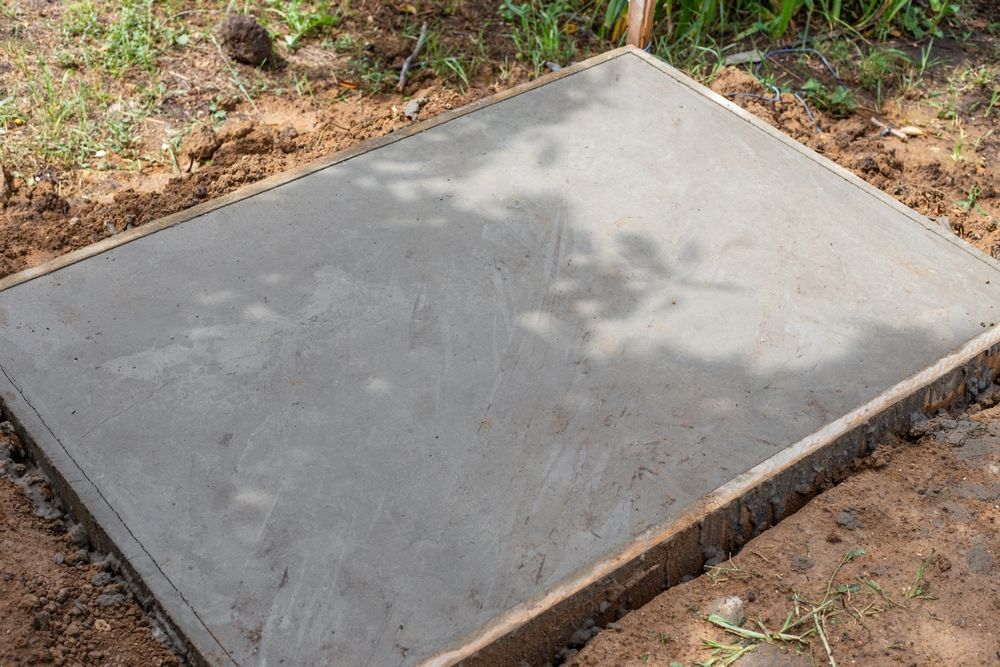
Expansive clay soils across South Texas crack concrete slabs and flatwork faster than most climates, making proper sub-base preparation the difference between pours that last decades and surfaces that fracture within two years. Lyric Services and Construction compacts a gravel sub-base on every pour rather than placing concrete directly on native soil, and calculates control joint spacing based on slab thickness to manage cracking before it happens. Properties in Floresville and along Highway 181 face soil conditions that require this ground-prep-first approach for any concrete work that needs to survive seasonal moisture cycling.
The compacted gravel layer creates a stable base that doesn't shift when clay soils expand during wet periods or contract during drought, while control joints provide planned crack locations that keep fractures confined to designed lines rather than running randomly across slab surfaces. Skipping either step leaves concrete vulnerable to the soil movement that creates uncontrolled cracking and surface failure.
Request a property evaluation to assess soil conditions and discuss concrete options for your project.
What Ground Preparation Prevents Long-Term
Compacted gravel sub-base prevents the differential settling that occurs when concrete sits directly on clay soil—as moisture content changes, clay expands and contracts unevenly, bending slabs until they crack. The gravel layer distributes weight uniformly and drains water away from the slab bottom, eliminating both the support variations and moisture accumulation that cause failure. Control joints cut into fresh concrete create weak lines where stress concentrates, forcing cracks to follow planned paths rather than zigzagging across visible surfaces.
After installation, you'll notice a smooth, level surface that drains properly rather than pooling water in low spots created by uneven settling. The slab stays intact through wet and dry seasons instead of developing the random crack patterns that appear when concrete is poured on unprepared ground. Control joints remain the only visible lines in the surface, keeping cracking predictable and contained rather than spreading across the entire pour.
Pour timing matters as much as preparation—concrete needs adequate curing time before bearing weight, and hot South Texas temperatures accelerate curing in ways that require moisture retention measures to prevent surface cracking. The process includes excavation to proper depth, gravel placement and compaction, forming and reinforcement placement, concrete pouring and finishing, control joint cutting, and curing procedures that account for local temperature and humidity conditions during the days following the pour.
What to Know Before Pouring Concrete
Property owners in Adkins and surrounding areas ask specific questions about concrete work before committing to slabs or flatwork installations.
Why use gravel sub-base instead of pouring on soil?
Gravel provides a stable, draining base that doesn't expand and contract with moisture changes like clay soil does; concrete poured directly on clay cracks as the soil moves underneath it during seasonal wet and dry cycles.
How are control joints different from cracks?
Control joints are planned weak lines cut into concrete at specific spacing to manage where cracking occurs; they keep stress-relief cracks confined to straight, uniform lines rather than allowing random fractures across the slab surface.
What affects concrete project cost?
Excavation depth and soil removal volume, gravel quantity needed for proper base thickness, reinforcement requirements, slab thickness, and site access for concrete truck delivery all impact material and labor costs.
When can I use the concrete after pouring?
Light foot traffic is safe after 24 to 48 hours in most conditions, but full weight-bearing use requires seven days of curing; vehicle traffic or heavy equipment needs the full cure period to prevent surface damage and cracking.
Why do some concrete slabs crack despite proper installation?
Soil conditions worse than anticipated, inadequate base compaction, pouring during extreme temperature conditions, or skipping control joints all contribute to cracking; proper preparation and execution minimize but don't entirely eliminate the possibility on expansive soils.
Lyric Services and Construction uses the same base-first process on every concrete pour regardless of job size, backed by 18 years of experience working with South Texas soil conditions. Schedule a consultation to discuss your concrete needs and review site-specific requirements for lasting results.