
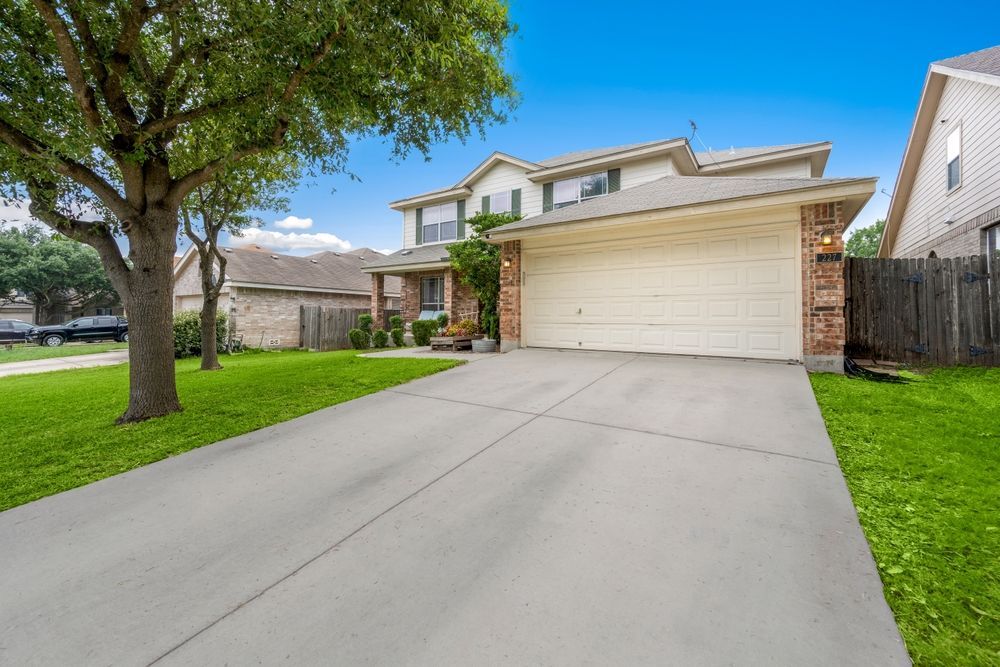
Slabs Built for Vehicle Loads
Concrete Driveways in Adkins for properties needing paved access that handles South Texas soil movement and traffic without cracking
Caliche and rural dirt roads around Adkins create dust and erosion problems that push homeowners toward paved driveways, and the China Grove area sees enough clay soil movement that driveways need to be spec'd for more than just surface appearance. Lyric Services and Construction pours residential driveways at six inches deep, which is a structural upgrade above the typical four-inch minimum most contractors use to keep bids low. The work includes compacted gravel sub-base before every pour, and the slab is finished with rounded broom-finish edges that prevent corner chipping under repeated vehicle loads.
Driveway installation starts with excavation and gravel fill to create a stable base that won't shift when clay soil expands during wet months. The concrete is poured to six-inch depth across the entire slab, not just at the edges, and the surface is finished with a broom texture that provides traction without rough edges that damage tires or crack prematurely.
Request a site evaluation to assess your current access conditions and determine grading requirements for proper drainage.
What Six-Inch Residential Driveways Actually Accomplish
The base-first prep process involves removing unstable soil, compacting the subgrade, and adding gravel fill before any concrete trucks arrive on site. Six-inch pour depth distributes vehicle weight across a thicker slab, which reduces cracking from repeated truck and trailer traffic that four-inch slabs can't handle long-term in South Texas soil conditions.
You notice the difference when you drive over the finished driveway and the surface doesn't flex or settle under loaded vehicles. The slab stays level without developing the shallow cracks and edge breaks that show up within two years on thinner pours, and the rounded broom-finish edges resist chipping when tires roll over the perimeter repeatedly. Dust and erosion from unpaved access roads stop the day the driveway cures, and your property stays cleaner during dry months without constant gravel reapplication.
Lyric Services and Construction has poured driveways across Adkins and Wilson County for eighteen years, and the six-inch residential spec is standard on every job without requiring upgrades or change orders. The thicker slab costs more upfront than budget four-inch pours, but it eliminates the crack repairs and surface replacements that thin driveways need after the first few freeze-thaw cycles.
Answers to Frequent Service Questions
Homeowners along Highway 181 and the Pleasanton Road corridor often ask what makes a driveway last in South Texas soil, and whether the six-inch pour depth really matters for residential use.
Why is six-inch pour depth necessary for a residential driveway?
Six inches distributes vehicle weight across a thicker structural slab, which prevents flexing and cracking when trucks, trailers, or heavy equipment drive over the surface repeatedly. Four-inch slabs meet minimum code requirements but crack sooner under real-world traffic loads, especially in clay soil that shifts seasonally.
What happens during the base prep process?
Unstable soil is excavated and removed, the subgrade is compacted with mechanical equipment, and gravel fill is added to create a stable foundation before concrete is poured. Base prep eliminates the voids and soft spots that cause driveways to settle unevenly and crack within the first year.
How does clay soil in Adkins affect driveway performance?
Clay expands when wet and contracts when dry, which creates upward pressure on thin slabs and causes cracking along weak points. Thicker concrete with proper base compaction resists that movement better than minimum-spec pours, and the slab stays intact through seasonal moisture cycles.
What is a broom-finish edge?
The edges of the driveway are finished with a rounded broom texture instead of sharp ninety-degree corners. Rounded edges resist chipping when vehicle tires roll over the perimeter, and the texture provides traction without creating rough surfaces that wear unevenly or trap debris.
How long does a six-inch driveway last compared to a four-inch pour?
Lifespan depends on soil conditions and traffic volume, but six-inch slabs typically last decades without major crack repairs, while four-inch residential driveways often show structural cracks within five to ten years under normal use. The thicker pour delays the need for costly surface replacement or overlay work.
Lyric Services and Construction is licensed and insured, and every driveway includes base compaction, gravel fill, and six-inch pour depth as standard scope. Schedule a consultation to review your property access needs and discuss grading options for your site.